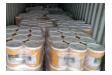
Founded in 2010, Global Paint for Charity (GPC) is the world's first nonprofit organization dedicated to recovering, repurposing, and redistributing surplus paint to underserved communities. Through an innovative circular economy model, GPC transforms environmental waste into measurable humanitarian, economic, and community value.
Each year, millions of gallons of usable paint are discarded despite growing needs in schools, affordable housing, shelters, healthcare facilities, public spaces, and community organizations. Global Paint for Charity bridges this gap by recovering surplus paint from manufacturers, businesses, contractors, municipalities, retailers, and households and redirecting it to projects that improve lives while reducing environmental waste.
Our work extends far beyond paint recycling. We help communities revitalize neighborhoods, improve educational environments, support disaster recovery efforts, enhance affordable housing, beautify public spaces, strengthen environmental stewardship, and restore dignity to vulnerable populations. By transforming waste into a valuable community resource, we advance sustainability, climate resilience, economic development, and social impact simultaneously.
Today, Global Paint for Charity is a trusted partner to corporations, municipalities, educational institutions, nonprofits, community leaders, and international humanitarian organizations throughout the United States and around the world.
Our Core Areas of Impact
Environmental Sustainability & Circular Economy
Recovering and redistributing surplus paint that would otherwise enter the waste stream, reducing landfill burdens, conserving natural resources, and extending the life cycle of valuable materials.
Community Revitalization & Beautification
Supporting neighborhood restoration projects that improve housing, schools, parks, libraries, community centers, public facilities, and places of worship.
Education & Youth Development
Creating brighter, safer, and more welcoming learning environments while engaging students and young people in service, environmental leadership, and community improvement initiatives.
Housing & Humanitarian Assistance
Providing restoration resources to underserved families, seniors, veterans, shelters, orphanages, and vulnerable populations.
Disaster Recovery & Community Resilience
Supporting rebuilding efforts in communities affected by natural disasters, economic hardship, and infrastructure deterioration.
Workforce Development & Community Engagement
Creating volunteer opportunities, supporting workforce readiness, promoting environmental education, and strengthening civic participation through community-based service projects.
Global Impact
Since 2010, Global Paint for Charity has:
• Recovered and diverted more than 320 million pounds of paint and related materials from landfills and the waste stream
• Redistributed more than 5 million gallons of reusable paint to communities across the United States and more than 44 countries worldwide
• Generated an estimated $125 million to $200 million in community value through the restoration of schools, shelters, healthcare facilities, affordable housing, public spaces, parks, community centers, and nonprofit institutions
• Helped avoid an estimated $40 million in paint disposal, recycling, transportation, and waste management costs for municipalities, businesses, and communities
• Conserved an estimated 65 million gallons of water by extending the lifecycle of existing paint products and reducing demand for new manufacturing
• Supported humanitarian and community development projects in more than 44 countries and 25 U.S. cities
• Improved thousands of schools, hospitals, shelters, orphanages, veterans housing facilities, senior housing communities, parks, and public spaces
• Positively impacted more than 15 million people through environmental sustainability, community revitalization, beautification, and humanitarian assistance initiatives
• Mobilized thousands of volunteers, students, corporate teams, and community partners in environmental stewardship and community service projects
Why Corporate Partners Invest in GPC
Global Paint for Charity provides corporations with a unique opportunity to simultaneously advance Environmental, Social, and Governance (ESG) goals while generating measurable environmental, economic, and community returns.
For many organizations, surplus paint represents both an environmental liability and a disposal expense. Through partnership with GPC, these materials become community assets that create social value while reducing operational costs.
Corporate partnerships with GPC can help organizations:
• Reduce paint disposal, transportation, recycling, and waste management costs
• Potentially qualify for charitable contribution tax deductions in accordance with IRS regulations and applicable tax laws
• Advance ESG, sustainability, circular economy, and environmental stewardship objectives
• Improve sustainability reporting metrics and stakeholder engagement
• Strengthen community relations and corporate citizenship initiatives
• Increase employee engagement through volunteerism and service opportunities
• Support climate-conscious resource conservation and landfill diversion efforts
• Demonstrate measurable environmental and social impact to customers, investors, employees, and communities
Illustrative Corporate Value Creation
A corporation donating approximately 500,000 gallons of surplus paint annually could potentially:
• Avoid approximately $4 million in disposal and waste management expenses
• Generate more than $12.5 million in charitable community value through product redistribution
• Potentially realize more than $2.6 million in federal tax savings depending on valuation methodologies and applicable tax regulations
• Create more than $16 million in combined economic, environmental, and social value while advancing ESG objectives
Every gallon recovered represents more than waste diverted. It represents costs avoided, resources conserved, communities restored, and lives improved.
Together, we are proving that sustainability is not simply about reducing waste. It is about creating economic value, restoring dignity, strengthening communities, and building a more sustainable future for all.
Hide Full Text